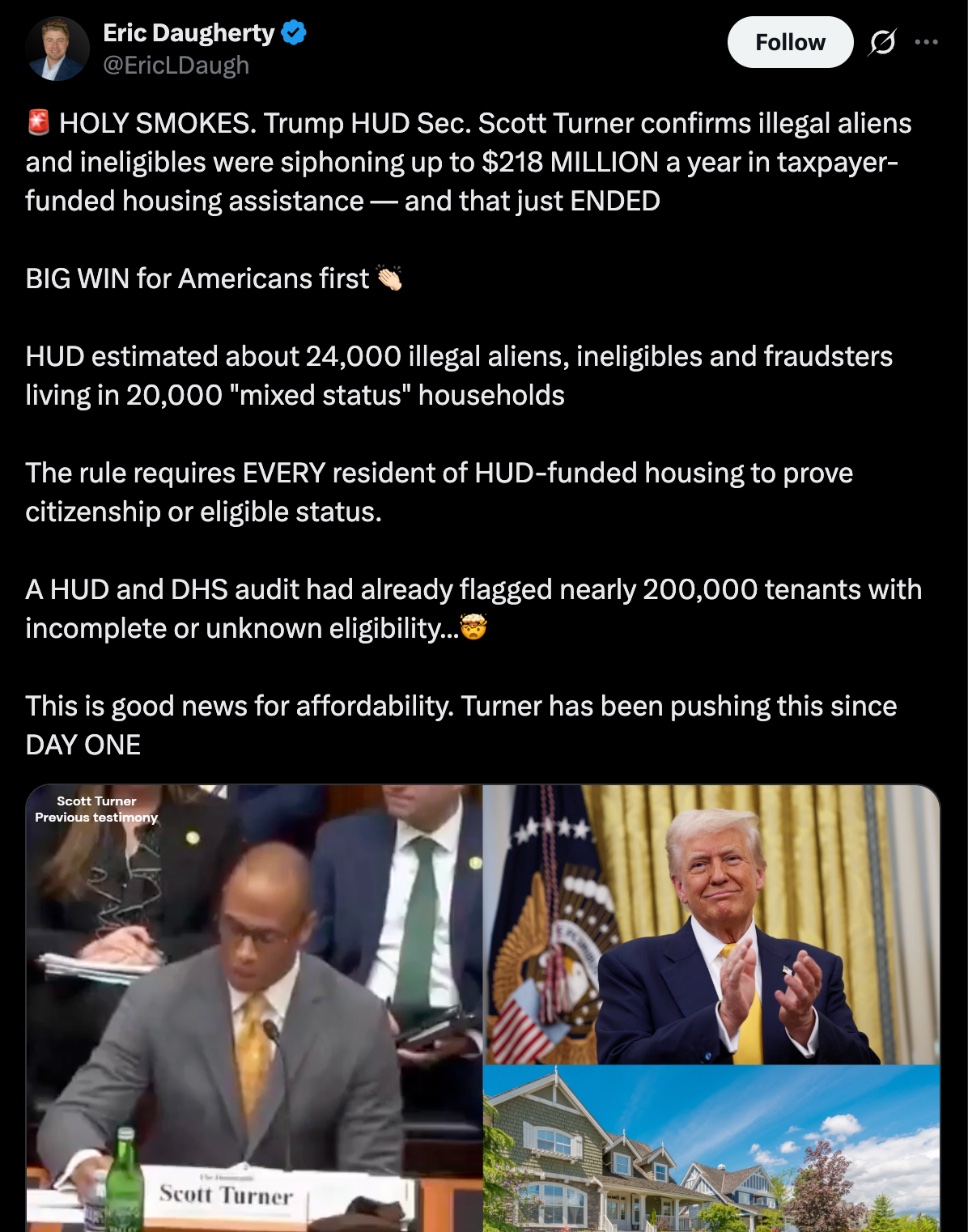
The 20,000 matches HUD's count. The 24,000 is Turner's, close to CBPP's 24,300 from HUD data. But those homes also hold about 55,000 eligible people, HUD gives no count of fraud, and some ineligible people hold temporary status.
Turner wrote in February that some 24,000 people in HUD-assisted housing are likely ineligible2. HUD's analysis counts about 20,000 mixed-status families as of December 20241. CBPP's analysis of 2024 HUD data finds 24,300 ineligible noncitizens among 79,600 people in 20,170 such households. The rest are citizens or eligible noncitizens, including 35,400 citizen children4.
These people appear in HUD's data as ineligible members of assisted families whose aid is already prorated4. HUD's rule cites "a comparatively higher risk of fraud or ineligibility when others in the family have not provided necessary evidence"1, but we found no HUD count of fraud. The ineligible categories include people with DACA or Temporary Protected Status, and people on temporary visas, as well as people with no legal status4. The rule changes verification and makes proration temporary1.