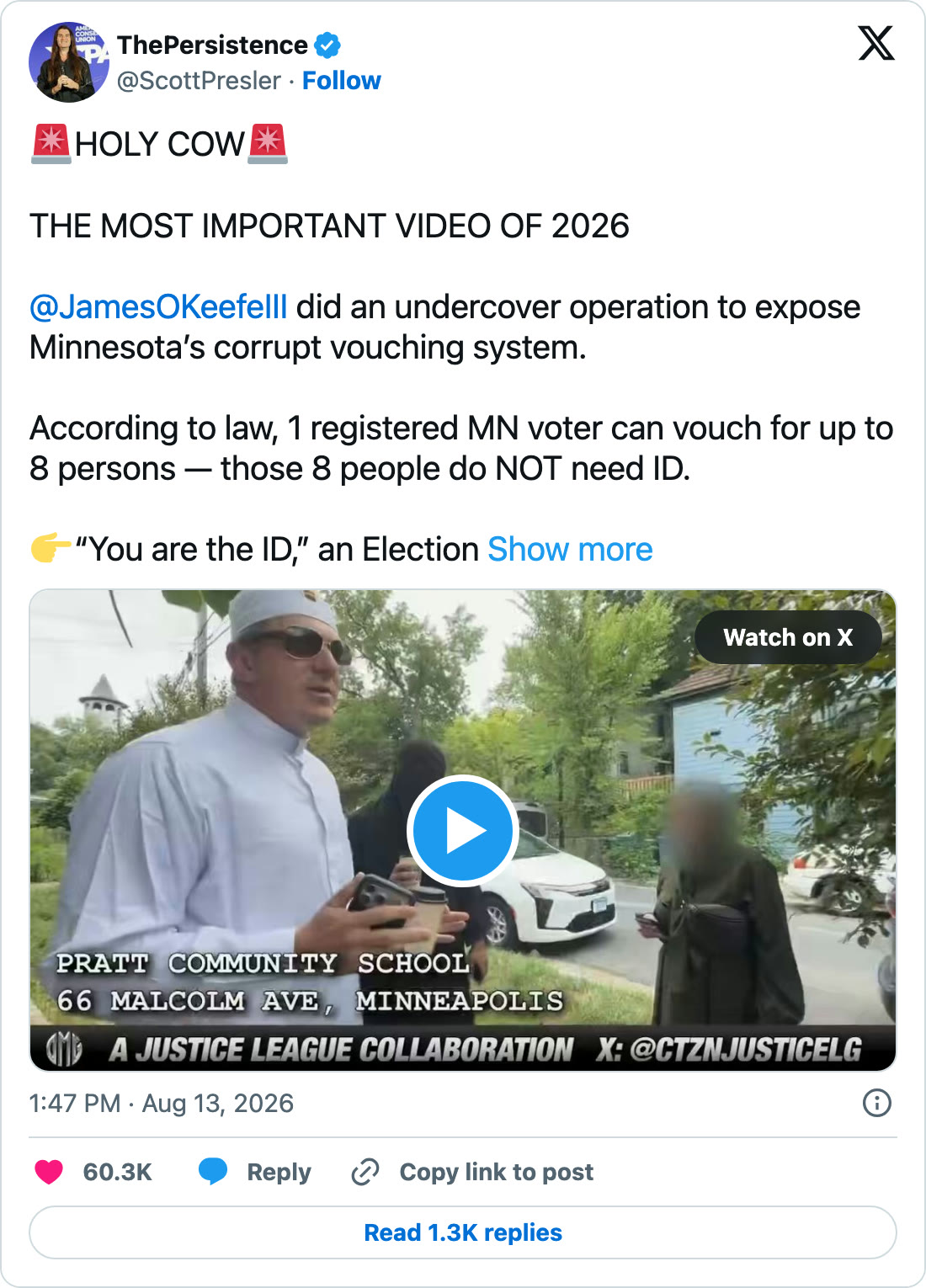
The limit of eight is right, and no one being vouched for has to show an ID card. But vouching covers address only. The form still asks for a license, state ID or partial Social Security number, checked after voting.
A voter registered in the precinct may sign up to eight proof-of-residence oaths on Election Day. Facility employees have no cap for residents1.
The oath says the signer personally knows the person lives in the precinct2. It replaces an address document, not the ID number the form asks for3. Someone without a number can certify that and still register4. Some descriptions, including a county training clip Presler posted, say "identity"5. In the edited video, captions show a worker saying "you can vouch for them as ID for them," and a graphic reads "You're the ID"6.
Those numbers get checked after the ballot. In 2024, 18,898 people used vouching on Election Day: 13,441 updating a registration, 5,457 new7. The Legislative Auditor reviewed about 4,400 new in-person vouched applications from July 1 to Nov. 5, 2024, that completed checks. About 94% passed identity matching by mid-2025. That count differs from the state's, and neither explains why. Almost all Election Day registrants voted regardless, and a failed match can come from an application error8.